 Back to Blog
 LifeCare Editorial Team
 January 29, 2026
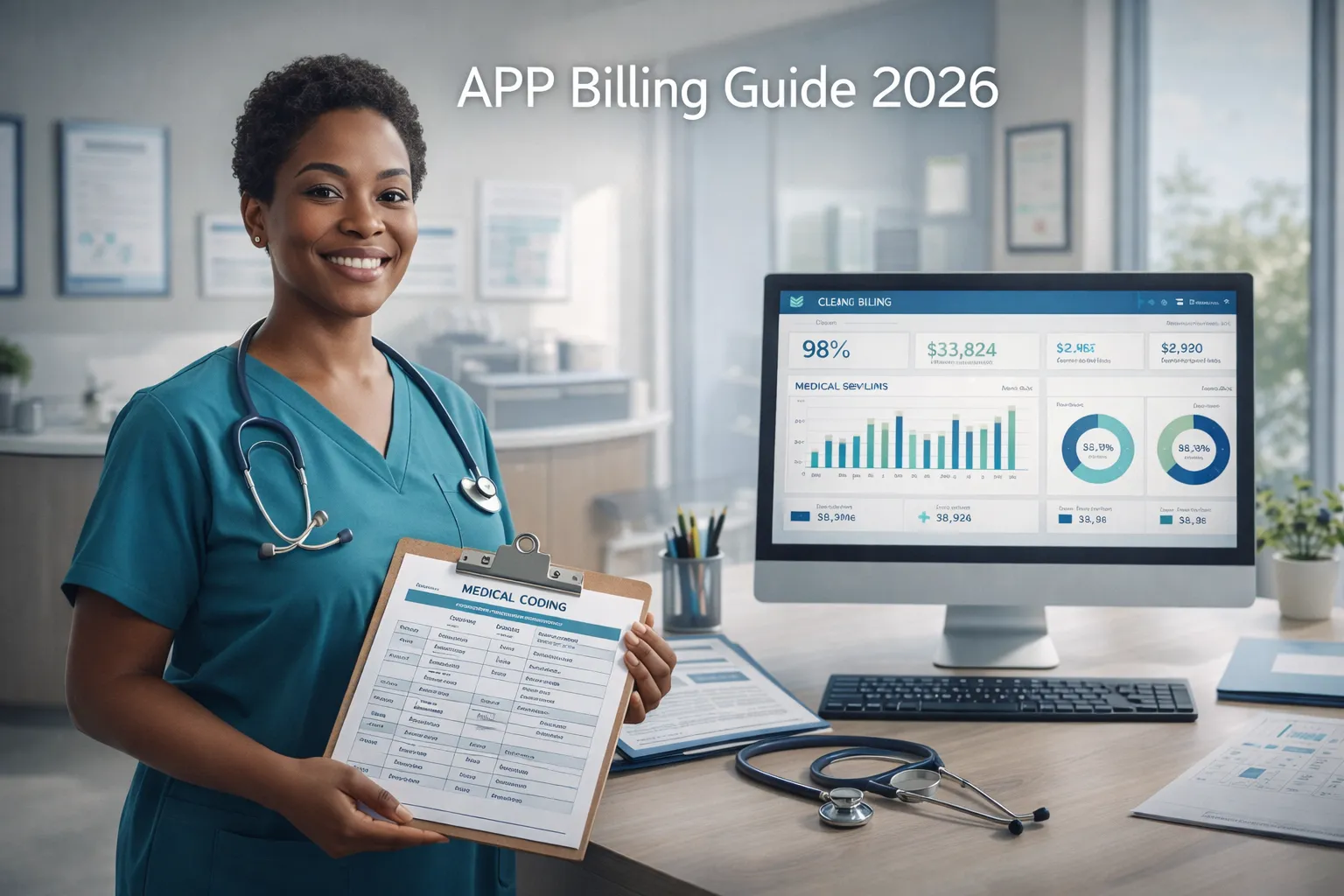
Advanced Practice Provider Billing: Complete 2026 Guide
Running a successful practice as an Advanced Practice Provider comes with unique challenges that extend far beyond patient care. Whether you're a Nurse Practitioner operating independently, a Physician Assistant working under physician supervision, or a CRNA managing complex anesthesia billing, understanding the intricacies of medical billing can make the difference between thriving financially and struggling with constant denials and underpayments.
At LifeCareBilling, we specialize in comprehensive billing solutions specifically designed for Advanced Practice Providers. Our expertise spans the complete revenue cycle management process—from initial credentialing and payer enrollment through claims submission, denial management, and collections. We understand the nuanced regulations surrounding incident-to billing, split/shared visit rules, and the ever-changing CMS guidelines that affect APP reimbursement rates.
This comprehensive guide explores everything Advanced Practice Providers need to know about medical billing in 2026, including recent regulatory changes, coding requirements, compliance strategies, and best practices for maximizing legitimate reimbursement while maintaining audit readiness.
Understanding the Advanced Practice Provider Billing Landscape
The healthcare industry increasingly relies on Advanced Practice Providers to deliver high-quality patient care across diverse settings. Nurse Practitioners, Physician Assistants, Certified Nurse Midwives, Certified Registered Nurse Anesthetists, and Clinical Nurse Specialists now comprise a significant portion of the healthcare workforce, particularly in primary care, emergency medicine, anesthesia, and specialty practices.
However, billing for APP services involves navigating complex regulations that differ substantially from physician billing. Medicare, Medicaid, and commercial payers each maintain distinct rules regarding how APPs can bill, what reimbursement rates apply, and what documentation requirements must be met. Understanding these differences is essential for optimizing revenue cycle management.
Direct Billing vs. Incident-To Billing
One of the most critical decisions APPs face is whether to bill directly under their own NPI or utilize incident-to billing under a supervising physician's NPI. Direct billing allows APPs to submit claims independently, typically receiving 85% of the physician fee schedule for Medicare services. This approach works well for APPs practicing independently or when incident-to requirements cannot be met.
Incident-to billing, conversely, allows APPs to bill under the supervising physician's NPI and receive full 100% reimbursement at physician rates. However, strict requirements must be satisfied: the physician must have established the initial plan of care, the patient must be established (not new), services must fall within the APP's scope of practice, and direct supervision must be available at the time of service. Direct supervision means the physician must be immediately available in the office suite, though not necessarily in the same room.
Understanding when each billing method applies prevents costly denials and ensures compliance during audits. Many practices benefit from hybrid approaches, using incident-to billing when requirements are met and direct billing in other situations.
The 2024 Split/Shared Visit Changes
For facility-based services in hospitals, emergency departments, and outpatient hospital settings, split/shared billing rules govern how APPs and physicians collaborate on patient care. Prior to 2024, CMS required the physician to perform a substantive portion of the face-to-face visit for the claim to be billed under the physician's NPI at the higher reimbursement rate.
The significant change implemented in 2024 allows practices to determine the substantive portion based on either time or medical decision making. If using time, whichever provider spends more than 50% of the total encounter time can be the billing provider. If using medical decision making, the provider performing the MDM component determines billing attribution.
This flexibility benefits practices by allowing more strategic decisions about billing provider selection. However, it also requires meticulous documentation. Time-based claims need clear time stamps showing when each provider began and ended their portion of the encounter. MDM-based claims require documentation demonstrating which provider performed the medical decision making. Attestation language must clearly indicate which methodology was used and support the billing provider selection.
APP-Specific Coding and Documentation Requirements
Accurate coding forms the foundation of successful APP billing. Evaluation and management codes dominate most APP encounters, whether in office settings, hospitals, or emergency departments. The 2021 E/M guideline changes simplified office visit coding by allowing selection based on either time or medical decision making, eliminating the need to document detailed history and examination elements for established patients.
Time-Based E/M Coding
When using time to select E/M levels, APPs must document the total time spent on the date of service, including both face-to-face and non-face-to-face activities like reviewing records, ordering tests, and communicating with other providers. Time thresholds determine code selection: 99213 requires 20-29 minutes, 99214 requires 30-39 minutes, and 99215 requires 40-54 minutes for established office visits.
For split/shared visits, when time determines the billing provider, documentation must clearly show how much time each provider spent. For example, if a PA spends 15 minutes with a patient and the supervising physician spends 20 minutes, the physician performed the substantive portion and should be the billing provider. Clear time stamps and attestation language prevent disputes during audits.
Medical Decision Making-Based Coding
Medical decision making complexity provides an alternative to time-based selection. MDM involves three elements: number and complexity of problems addressed, amount and complexity of data reviewed, and risk of complications or morbidity. The level of MDM determines the appropriate E/M code, with higher complexity supporting higher-level codes.
For APPs, documenting MDM requires showing clinical reasoning, differential diagnosis consideration, and treatment plan rationale. When using MDM for split/shared visit attribution, the documentation must clearly indicate which provider performed the decision-making component—typically the provider who determined the diagnosis and treatment plan rather than simply executing orders.
Credentialing and Payer Enrollment for APPs
Before APPs can bill insurance carriers, they must complete credentialing—the process of verifying qualifications and enrolling in payer networks. This involves submitting applications to Medicare, Medicaid, and commercial insurance companies, providing documentation of licenses, certifications, education, and work history.
Medicare Enrollment Considerations
Medicare enrollment for APPs requires obtaining an NPI, completing the CMS-855I application, and providing supporting documentation. The process typically takes 60-90 days, though delays can occur if applications are incomplete. APPs must enroll in every state where they provide services, and enrollment must be maintained with updated information about practice locations and specialties.
Taxonomy codes identify the APP's specialty and scope of practice. Selecting the correct taxonomy code is critical, as incorrect codes can trigger claim denials. Nurse Practitioners use taxonomy code 363L00000X for general practice or specialty-specific codes like 363LF0000X for family practice. Physician Assistants use 363A00000X, while CRNAs use 367500000X.
Commercial Payer Credentialing
Commercial insurance credentialing involves working with each individual payer, though CAQH (Council for Affordable Quality Healthcare) streamlines the process. APPs create and maintain CAQH profiles containing their credential information, which most commercial payers access for verification. Keeping CAQH profiles current and complete reduces credentialing delays.
Credentialing timelines for commercial payers vary widely, ranging from 60 to 180 days depending on the carrier. During this period, APPs cannot bill these payers, creating cash flow challenges. Planning credentialing well in advance of practice start dates or new payer contract additions mitigates revenue interruptions.
Specialty-Specific APP Billing Considerations
Different APP specialties face unique billing challenges and opportunities. Understanding specialty-specific requirements optimizes reimbursement and prevents denials.
CRNA Anesthesia Billing
Certified Registered Nurse Anesthetists navigate particularly complex billing rules involving time-based units, base units, modifiers indicating supervision level, and concurrency limitations. Anesthesia claims require calculating total units by adding base units (determined by the procedure's ASA code) to time units (each 15-minute increment).
CMS modifiers indicate the anesthesia care model: QX indicates medically directed by a physician, QZ indicates CRNA working without medical direction, QK indicates medical direction of 2-4 concurrent cases, and QY indicates medical direction by a teaching physician. Using the wrong modifier results in incorrect reimbursement or outright denials.
Concurrency rules limit how many cases an anesthesiologist can medically direct simultaneously. Medical direction allows up to four concurrent cases, while medical supervision has no numerical limit but reimburses at lower rates. Documentation must support the supervision level claimed and demonstrate the anesthesiologist's involvement met CMS requirements.
CNM Maternity and Delivery Billing
Certified Nurse Midwives providing prenatal, labor, and postpartum care can bill using global maternity codes or itemized service codes. Global codes bundle all routine prenatal visits, delivery, and postpartum care into a single code submitted after delivery. This simplifies billing but requires tracking all included services to ensure the global package is complete.
Itemized billing separates prenatal visits, delivery, and postpartum care, allowing payment as services occur rather than waiting until delivery. This approach improves cash flow but increases billing complexity. CNMs must understand when global billing is appropriate versus when itemized billing better serves their practice model.
Clinical Nurse Specialist Billing
Clinical Nurse Specialists practice across acute care, chronic disease management, and mental health settings. Their billing requirements vary based on practice setting and services provided. CNSs working in hospitals typically use facility billing codes, while those in outpatient settings use professional fee codes.
Scope of practice regulations vary by state, affecting what services CNSs can bill independently versus services requiring physician collaboration. Understanding state-specific practice acts ensures billing compliance and prevents denials based on scope of practice violations.
Common APP Billing Errors and How to Avoid Them
Even experienced billing teams make mistakes with APP claims. Recognizing common errors helps practices implement prevention strategies.
NPI Attribution Errors
One frequent error involves billing claims under the wrong NPI. When incident-to requirements are met, claims should bill under the supervising physician's NPI. When incident-to doesn't apply, claims must bill under the APP's individual NPI. Mixing these up results in denials or incorrect reimbursement rates.
Practices must establish clear protocols for determining which NPI to use for each encounter. Staff need training on incident-to requirements and split/shared rules to make correct real-time decisions during claim creation.
Modifier Misuse
Modifiers communicate important information about how services were provided, but incorrect modifier usage triggers denials. The SA modifier, required by some commercial payers when PAs provide services, must be appended to appropriate claims. Missing this modifier when required or adding it when not needed causes processing issues.
Split/shared visit modifier usage also creates confusion. While Medicare doesn't require a specific split/shared modifier, clear documentation remains essential. Some commercial payers have their own requirements, necessitating payer-specific edit rules in billing systems.
Place of Service Errors
Place of service codes indicate where services occurred—office (POS 11), hospital inpatient (POS 21), hospital outpatient (POS 22), or emergency department (POS 23). Incident-to billing only applies in office settings (POS 11), never in facility settings. Billing incident-to with a facility POS code results in automatic denials.
Similarly, split/shared billing only applies in facility settings, not office settings. Using split/shared rules for office visits or incident-to rules for hospital visits demonstrates fundamental misunderstanding of CMS policies and invites audits.
Documentation Deficiencies
Insufficient documentation underlies many APP claim denials. For incident-to billing, documentation must show the physician established the plan of care, the patient is established, and supervision was available. Missing any element invalidates incident-to billing and requires claim correction.
For split/shared visits, documentation must clearly identify both providers who saw the patient, what each provider did, and which provider performed the substantive portion. Time-based claims need time stamps; MDM-based claims need clear indication of who made the medical decisions. Vague documentation invites denials and audit findings.
Denial Management Strategies for APP Claims
Despite best efforts, denials occur. Effective denial management requires systematic processes for identifying, analyzing, and resolving denials while preventing recurrence.
Common APP Denial Reasons
APPs encounter specific denial patterns related to their unique billing rules. Denials for "incident-to non-compliance" indicate payers determined requirements weren't met—perhaps the patient was new, the physician wasn't available, or the service exceeded the APP's scope. These denials require careful review to determine whether the claim should be corrected to bill under the APP's NPI or whether additional documentation proves incident-to compliance.
"Billing provider mismatch" denials occur when the NPI doesn't match payer expectations. Split/shared visits denied for "lack of substantive service" indicate documentation didn't adequately show which provider performed the substantive portion. These denials need supplemental documentation showing time logs or MDM evidence supporting the billing provider selection.
Appeal Strategies
Successful appeals require understanding the specific denial reason and providing targeted evidence addressing the payer's concern. Generic appeal letters rarely succeed; customized appeals citing specific policy language and providing supporting documentation achieve better results.
For documentation-related denials, appeals should include the complete medical record with highlighting or annotations drawing attention to relevant elements. For policy interpretation denials, appeals should quote the relevant CMS or payer policy and explain how the documented services comply. For processing errors, appeals should identify the specific error and request correction.
Preventing Future Denials
Tracking denial patterns reveals systemic issues requiring workflow corrections. If one payer consistently denies incident-to claims, the practice may need additional staff training on that payer's specific requirements. If split/shared documentation denials are common, providers may need templates or training on attestation language.
Regular denial reports categorized by denial reason, payer, and provider help identify trends. Quarterly reviews with clinical and billing staff address patterns and implement preventive measures. Proactive prevention always costs less than reactive appeals.
Compliance and Audit Preparedness
APPs face heightened audit scrutiny due to the complexity of their billing rules and the potential for improper incident-to or split/shared billing. Maintaining audit readiness protects practices from financial liability and sanctions.
Documentation Best Practices
Comprehensive, clear documentation forms the best audit defense. Templates help ensure consistency, but providers must personalize each note to reflect the specific patient encounter. Generic template language without patient-specific details raises audit concerns.
For incident-to services, documentation should explicitly reference the physician's established plan of care and note the physician's availability for consultation if needed. For split/shared visits, clear attestation language stating "I performed the substantive portion of this split/shared visit based on [time/medical decision making]" strengthens audit defense.
Internal Audits
Regular internal audits identify compliance issues before external auditors find them. Quarterly chart reviews evaluating a sample of APP encounters for documentation completeness, coding accuracy, and billing compliance help practices self-correct problems proactively.
Audit findings should drive targeted education. If audits reveal consistent time documentation issues, providers need training on time tracking requirements. If incident-to claims don't consistently document physician supervision, staff need education on documentation requirements.
Policy and Procedure Documentation
Written policies and procedures demonstrate organizational commitment to compliance. Practices should document their incident-to protocols, split/shared billing workflows, supervision arrangements, and coding guidelines. These policies should be reviewed annually and updated to reflect regulatory changes.
Staff acknowledgment forms confirming receipt and understanding of policies create accountability. Training documentation showing when staff received education on billing rules further demonstrates compliance efforts during audits.
Technology Solutions for APP Billing
Modern practice management systems and revenue cycle management platforms offer features specifically supporting APP billing complexity.
Automated Claim Edits
Advanced claim scrubbing systems apply APP-specific edit rules before claim submission. These systems check for common errors like incident-to claims with facility place of service codes, split/shared claims missing required documentation, or modifier usage errors. Catching errors before submission prevents denials and accelerates payment.
Real-Time Eligibility Verification
Verifying insurance eligibility before appointments identifies coverage issues early. For APPs, eligibility verification should also check whether the patient's plan credentials the APP as an in-network provider. Some plans credential physicians but not their employed APPs, creating unexpected out-of-network situations.
Integrated Documentation Templates
EHR systems can include smart templates prompting APPs to document elements required for compliant billing. Time-based E/M templates can calculate total time automatically from time stamps. Split/shared templates can prompt attestation language and require identifying both providers involved in care.
Performance Dashboards
Real-time dashboards showing key performance indicators help practices monitor billing health. Metrics like clean claim rate, denial percentage by denial reason, days in accounts receivable, and collection rates by payer identify problems requiring attention. APP-specific metrics might include percentage of claims billed incident-to versus directly, average reimbursement per encounter, and split/shared documentation compliance rates.
Choosing the Right Billing Partner for Your APP Practice
Many APP practices eventually decide that outsourcing billing to specialized revenue cycle management companies offers better results than in-house billing departments. Several factors influence this decision.
Expertise in APP Regulations
APP billing requires specialized knowledge of incident-to rules, split/shared requirements, and specialty-specific coding. Billing companies serving primarily physician practices may lack this expertise, leading to errors and underpayment. Choosing partners with demonstrated APP billing experience ensures proper handling of your unique requirements.
Credentialing Support
Comprehensive billing partners manage the entire credentialing process, from initial applications through ongoing re-credentialing. This includes CAQH profile maintenance, payer application completion, enrollment status tracking, and problem resolution when delays occur. Credentialing expertise prevents revenue interruptions from enrollment lapses.
Transparent Reporting
Quality billing partners provide detailed, transparent reporting showing exactly what's happening with your revenue cycle. You should have access to dashboards showing claim submission volumes, denial rates and reasons, appeal status, payment posting, and outstanding accounts receivable. Monthly reports should highlight trends and identify opportunities for improvement.
Compliance Support
Beyond claim submission, billing partners should support compliance through documentation templates, coding education, policy development, and audit preparation. When audits occur, experienced billing companies provide expert support through the audit process, helping respond to document requests and explaining billing rationale to auditors.
Conclusion
Advanced Practice Provider billing in 2026 requires navigating complex regulatory frameworks, maintaining meticulous documentation, and staying current with evolving CMS and commercial payer policies. Whether you're a Nurse Practitioner building an independent practice, a Physician Assistant working in a hospital setting, a CRNA managing anesthesia billing, or any other APP specialty, understanding billing fundamentals protects your revenue and ensures compliance.
The key to successful APP billing lies in understanding when to use incident-to billing versus direct billing, properly documenting split/shared visits, selecting appropriate E/M codes based on time or medical decision making, and maintaining audit-ready documentation. Technology solutions, systematic denial management, and regular compliance audits strengthen billing operations and prevent revenue leakage.
For many APPs, partnering with specialized billing companies like LifeCareBilling provides the expertise, technology, and dedicated support needed to maximize reimbursement while minimizing administrative burden. Our team understands the nuances of APP billing across all specialties and practice settings, from credentialing and enrollment through claims submission, denial management, and collections.
By implementing the strategies outlined in this guide—whether independently or with billing partner support—Advanced Practice Providers can build financially sustainable practices that properly compensate them for the valuable care they deliver to patients across diverse healthcare settings.
Frequently Asked Questions
Can Nurse Practitioners and Physician Assistants bill under their own NPI?▼
Yes, both NPs and PAs can enroll with Medicare and commercial payers to bill directly under their own individual NPI. When billing directly, Medicare typically reimburses at 85% of the physician fee schedule. However, incident-to billing allows APPs to bill under a supervising physician's NPI at 100% reimbursement when specific requirements are met: the physician established the plan of care, the patient is established, services are within scope of practice, and direct supervision is available. Understanding when each method applies optimizes revenue while maintaining compliance.
What is incident-to billing and when can APPs use it?▼
Incident-to billing allows APPs to bill services under a supervising physician's NPI and receive full physician-level reimbursement. Requirements include: physician created the initial plan of care, patient is established (not new to the practice), services fall within the APP's scope of practice and state regulations, and the physician provides direct supervision (immediately available in the office suite). Incident-to billing only applies in office settings with place of service code 11, never in hospitals or other facility settings. Documentation must clearly demonstrate all requirements were met.
What is split/shared billing and how did it change in 2024?▼
Split/shared billing applies to facility-based evaluation and management services where both an APP and physician see the same patient on the same calendar day. The 2024 CMS rule change allows determining the "substantive portion" based on either time spent (more than 50% of total encounter time) or medical decision making complexity. Previously, only face-to-face time could determine the substantive portion. This flexibility benefits practices but requires clear documentation showing which methodology was used and supporting the selected billing provider through time logs or MDM documentation.
Can CRNAs bill independently for anesthesia services?▼
Yes, Certified Registered Nurse Anesthetists can bill independently or under medical direction by an anesthesiologist. The billing approach affects which CMS modifiers apply: QZ indicates independent CRNA practice without medical direction, QX indicates medically directed by a physician, QK indicates medical direction of 2-4 concurrent cases, and QY indicates medical direction by a teaching physician. Proper modifier usage ensures correct reimbursement rates. Anesthesia billing also requires calculating base units plus time units and understanding concurrency rules that limit how many cases can be medically directed simultaneously.
What if I practice across multiple states or locations?▼
APPs practicing in multiple states must obtain licenses in each state, enroll with Medicare separately for each state, and understand varying state scope of practice regulations. Credentialing with commercial payers must also occur for each practice location. Taxonomy codes should accurately reflect your specialty, and claims must use the correct place of service codes for each location. Telehealth services add additional complexity, as both the originating site (where the patient is located) and distant site (where you're located) regulations may apply. Billing partners experienced with multi-state APP practices can navigate these complexities and ensure compliance across all locations.